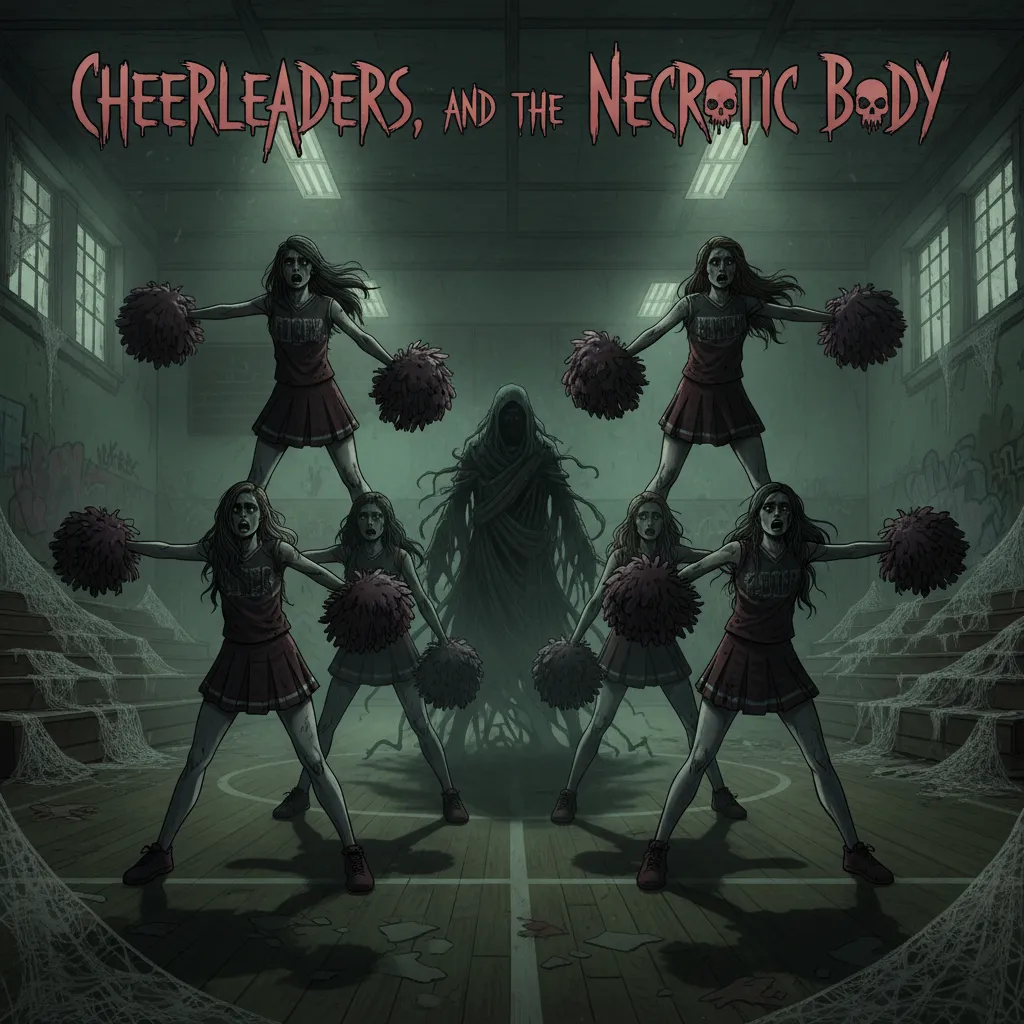
Everyone brings baggage to high school films—memories, expectations, a tinge of awkwardness. But what if these movies weren’t just about prom and popularity, but instead served as blueprints for dissecting society’s hidden rules? Years ago, after stumbling upon a midnight screening of *All Cheerleaders Die*, I found myself pondering less about the supernatural plot and more about the underlying anarchy pulsing beneath its shiny surface. This post isn’t just a film review; it’s a journey into the wild territory where psychoanalysis, philosophy, and film collide, following cheerleaders as they explode conventional categories and morph into something uncannily monstrous.
Through a Schizoanalytic Lens: Why High School Movies Matter More Than We Think
High school movies are often dismissed as simple entertainment or nostalgic coming-of-age tales, but a schizoanalytic reading reveals their deeper significance. Drawing from Deleuze and Guattari’s frameworks, as well as chaos theory, these films can be seen as detailed maps of desire, power, and social control. The American high school, as depicted in films like All Cheerleaders Die, operates as a microcosm of the State apparatus—a tightly regulated system where identities are produced, policed, and sometimes spectacularly unraveled.
High School as the Original Deterritorializer
Within the schizoanalytic tradition, the high school is not just a backdrop but a powerful machine for shaping subjectivity. It is the “original deterritorializer”—a space where young people are uprooted from childhood and reassembled according to the needs of the capitalist socius. Here, the machinery of social coding is at its most intense. Students are sorted, labeled, and disciplined, their desires redirected into safe, productive channels. The school’s architecture, rules, and rituals all work to enforce these divisions, making it a primary site for the anti-production of desire.
The Cheerleader Trope and Cinematic Power Hierarchies
Within this system, the cheerleader stands at the apex of the social pyramid. As analyzed in “The Deterritorialization of the Socius and the Necrotic Becoming-Woman of the Body-without-Organs, 2013,” the cheerleader is more than a character—she is a desiring-machine, a living symbol of affective labor and social coding. Her body is a site of intense regulation: every gesture, smile, and performance is carefully managed to reinforce ideals of desirability and success. This is what Reich would call character armor, a polished surface that hides ontological insecurity and blocks the free flow of desire. In film, the cheerleader’s visibility is both her power and her prison, making her the perfect figure for exploring the politics of desire and control.
Personal Reflection: The Friend Who Needed to Be Seen
Many viewers can recall someone from their own high school years who seemed to embody this struggle. There was always that friend who needed to be seen, who poured herself into the roles and rituals demanded by the school, even when it meant losing touch with her own desires. This personal memory echoes the schizoanalytic insight that the social machinery of high school doesn’t just shape what we do—it shapes who we believe we are allowed to become.
Unpacking the Machinery: Social Coding and Affective Labor
Schizoanalysis helps us unpack how high school films dramatize the machinery of social coding. The cheerleader’s labor is not just physical but emotional and affective—she must constantly manage her feelings, her relationships, and her image. This is affective labor at its most visible, and it is deeply gendered. The film All Cheerleaders Die shows how these coded roles can be violently disrupted, exposing the underlying flows of desire and power that the school tries to contain. In this way, high school movies become sites where the boundaries of identity, power, and desire are tested and sometimes shattered.
- #Schizoanalysis
- #BodyWithoutOrgans
- #Deterritorialization
- #DesireFlows
- #Necropolitics
- #FilmTheory
Cheerleaders, Character Armor, and Repressed Desiring-Machines
In the schizoanalytic reading of All Cheerleaders Die, the cheerleader emerges as the ultimate emblem of perfected social coding. Within the high school’s rigid hierarchy—a microcosm of the wider State apparatus—cheerleaders are not simply students or athletes. They are desiring-machines engineered to capture, redirect, and commodify affect, visibility, and sexuality. Their bodies and actions are meticulously choreographed, not just for performance, but for the reinforcement of social norms and the maintenance of the capitalist socius. This is the “surface brilliance” that dazzles peers and adults alike, masking a deeper, more fragmented reality.
Drawing on Wilhelm Reich’s concept of character armor, the film’s cheerleaders exemplify the everyday performance of emotional and physical rigidity. Character armor, as Reich theorized, is a set of learned defenses—bodily and psychological—that individuals develop to protect themselves from vulnerability and primal desire. In the context of the film, this armor is visible in the cheerleaders’ unwavering smiles, perfect posture, and seamless routines. An invented anecdote from a stage mom encapsulates this ethos:
“If you want to win, you must never flinch, never feel.”
This advice is not just about winning competitions; it is about surviving and thriving within a system that rewards emotional suppression and surface perfection.
The commodification of affect, desire, and the body is central to the cheerleader’s role. Their smiles, cheers, and even their physical forms become products—consumed by audiences, peers, and the masculine gaze. The cheerleader’s mouth chants for the crowd, her legs perform for the team, and her sexuality is objectified and traded as social capital. These are not merely personal attributes but organs detached and reassigned in service to the social body, as described by the concept of the Body-without-Organs (BwO). The high school, as a territorializing machine, ensures that these bodies remain tightly regulated and their desires safely channeled.
Yet, this system is not maintained by the cheerleaders alone. Collusion is everywhere—from peer pressure and parental ambition to institutional complicity. Peers reinforce the hierarchy through admiration or exclusion; parents push for achievement, sometimes at the cost of authenticity; schools reward conformity and punish deviation. The result is a collective investment in the cheerleader’s polished exterior, even as internal fragmentation grows. Who is really holding it together? The answer is often: no one. The brilliance on the surface conceals a deep-seated ontological insecurity, a sense of self that is always at risk of shattering.
Behind the routines and smiles lies the machinery of repressed desiring-production. Schizoanalysis asks: What flows of desire are being blocked, redirected, or commodified? The cheerleaders’ apparent unity and confidence are, in fact, the outcome of intense social coding and repression. Their true desires—unruly, unpredictable, molecular—are suppressed beneath layers of character armor. The film suggests that this repression is not just personal but systemic, built into the very architecture of the high school and the broader capitalist socius. Only a rupture—a moment of deterritorialization—can expose what has been hidden and unleash the flows of desire that the system works so hard to contain.
#Schizoanalysis #BodyWithoutOrgans #Deterritorialization #DesireFlows #Necropolitics #FilmTheory
Necrotic Becoming: Car Crashes, Rupture, and Zombie Agency
In All Cheerleaders Die, the car crash is more than a dramatic plot device—it is an existential reset that violently interrupts the high school’s rigid social order. This moment of rupture, as analyzed through schizoanalysis, marks the point at which the familiar “map” of social roles and expectations no longer matches the lived “territory” of the characters’ experiences. The crash deterritorializes the cheerleaders, ejecting them from their carefully coded positions atop the school’s social hierarchy and thrusting them into a space of radical uncertainty. This raises a provocative question: What if everyone experienced such a cataclysmic moment, where the structures that define us are suddenly erased?
Before the crash, the cheerleaders are prime examples of character armor—a Reichian concept describing the psychological and bodily defenses that block authentic desire. Their identities are tightly bound to the demands of the secondary socius (the high school), functioning as desiring-machines whose outputs—beauty, sexuality, performance—are strictly regulated. The crash shatters this armor, exposing the raw, unmediated flows of desire that the social machine had previously contained. In schizoanalytic terms, this is the birth of the necrotic Body-without-Organs (BwO): a body no longer defined by its parts’ functions within the social order, but by its openness to new, unpredictable intensities.
The supernatural resurrection that follows is not just a return to life, but a metaphor for the unleashing of uncontrolled desire. The cheerleaders’ new powers—telekinesis, superhuman strength, and the need to feed on life force—reflect the eruption of energies that had been suppressed by character armor. Their transformation from consumers (of social validation, attention, and affection) to predators (who must now consume others to survive) illustrates a profound shift in agency. No longer bound by the roles of daughter, girlfriend, or team captain, they become deterritorialized desiring-machines, defined by what they do rather than who they are.
This new agency, however, is deeply ambivalent. The cheerleaders’ freedom is achieved through violence and predation, embodying what theorists call necropolitics. In this state, they are liberated from the biopolitical contracts that govern the living—rules about who gets to live, who must obey, and who is valued. Instead, they operate according to a new, monstrous logic: freedom as the power to kill, consume, and transform. Their collective identity becomes fluid and interchangeable, echoing the schizoanalytic ideal of a self that is always in flux, never fixed.
The film uses the aesthetics of spasm—sudden eruptions of supernatural power—to visualize the release of trapped desire. These moments are both empowering and tragic, as the cheerleaders’ abilities depend on a cycle of violence and consumption. The necrotic BwO is thus a site of both liberation and danger: it offers a glimpse of agency unbound by social or moral codes, but at the cost of becoming monstrous. In All Cheerleaders Die, the car crash and its aftermath serve as a powerful allegory for the risks and possibilities of deterritorialized desire in the context of American teen film.
- #Schizoanalysis
- #BodyWithoutOrgans
- #Deterritorialization
- #DesireFlows
- #Necropolitics
- #FilmTheory
Jocks, Muscular Armor, and the Collapse of Patriarchal Machines
The archetype of the jock in American teen film, especially as analyzed in All Cheerleaders Die, is a study in sanctioned aggression and impermeability. Schizoanalytic critique, drawing on Wilhelm Reich’s concept of muscular armor, frames the jock as a living blockade—his body a fortress, his emotions locked away behind layers of social and physical rigidity. As one gym teacher famously quipped, “Real men never break.” Yet, the unspoken question lingers: who is left to pick up the pieces when that armor finally shatters?
This muscular armor is not just a personal trait but a political tool. It is designed to reinforce the patriarchal order within the high school, itself a microcosm of the State apparatus. The jock’s sanctioned aggression is not simply tolerated; it is celebrated as a model of masculine success. In this way, the jock becomes a desiring-machine whose flows are tightly regulated, channeling energy into dominance, competition, and the upholding of social hierarchies. Emotional permeability is discouraged, as vulnerability threatens the stability of the entire system.
Within this structure, the relationship between jocks and cheerleaders forms what schizoanalysis calls a machine coupling. Here, dominance and validation are exchanged in a closed circuit: jocks provide physical power and social protection, while cheerleaders offer visibility and sexual affirmation. This coupling is not just about romance or popularity; it is a mechanism for maintaining the stratified order of the high school socius, ensuring that desire is safely contained and redirected.
However, All Cheerleaders Die disrupts this arrangement in spectacular fashion. The cheerleaders, resurrected and radically transformed, weaponize the very energies that once oppressed them. Their new, necrotic Body-without-Organs (BwO) state allows them to turn the jocks’ aggression back on its source. The jocks’ muscular armor—once a symbol of invulnerability—becomes a liability, as the cheerleaders’ supernatural powers bypass and dismantle these defenses. The result is a violent subversion of the patriarchal machine, a messy reversal where those who enforced the rules are suddenly at the mercy of those they once controlled.
This upheaval aligns with Paulo Freire’s ideas about the necessity of rupture in pedagogy, but with a distinctly gory twist. Instead of dialogue and gradual awakening, the film presents a sudden, traumatic break—a deterritorialization that shatters the old order. The cheerleaders’ liberation is not gentle or redemptive; it is monstrous and predatory, revealing that the collapse of one power structure often gives rise to another, equally repressive form.
After the collapse, the question remains: are new power structures ever truly new? The film suggests that even as the old patriarchal machines fall, the forces that replace them are shaped by the same logic of survival and consumption. The cheerleaders’ newfound agency is inseparable from violence and instability, their desires now unbound but also unmoored. In this way, All Cheerleaders Die maps the dangerous terrain of deterritorialized desire, where the promise of freedom is always shadowed by the threat of a new, predatory socius.
#Schizoanalysis #BodyWithoutOrgans #Deterritorialization #DesireFlows #Necropolitics #FilmTheory
Monstrous Freedom: BwOs, Lines of Flight, and the Problem of Utopia
The schizoanalytic reading of All Cheerleaders Die reveals a paradox at the heart of liberation: the emergence of the Body-without-Organs (BwO) as both a site of freedom and a new form of instability. After their supernatural resurrection, the cheerleaders no longer fit into the rigid, molar identities of the high school hierarchy. Instead, they enter a state of becoming-spectral, becoming-animal, and becoming-mutant. These unstable new identities are marked by their fluidity and unpredictability, echoing Deleuze and Guattari’s concept of the BwO as a body in constant transformation, refusing fixed meaning or function.
This process of deterritorialization—the breaking away from social codes and roles—initially appears to offer a kind of utopia. The cheerleaders, once tightly controlled by the demands of the secondary socius, now experience an eruption of raw desire-flows. Their powers, such as telekinesis and superhuman strength, are not just supernatural abilities but manifestations of previously repressed energies, now liberated from character armor and social expectation. Yet, this utopia is fleeting. The text describes cycles of plateau and collapse, where moments of freedom quickly give way to new forms of constraint.
Curious, isn’t it, how every promise of freedom gets haunted by hunger?
This haunting is literal and metaphorical. The cheerleaders’ newfound agency depends on consuming the life force of others—a shift from social repression to predatory necessity. Their liberation is thus shadowed by a new kind of hunger, suggesting that every escape from molar identity (fixed social roles) is accompanied by the risk of falling into another, equally binding structure. The necrotic BwO is free from the old order, but only by embracing a monstrous, survival-driven existence.
This raises a critical question: Are the post-resurrection cheerleaders truly free? The schizoanalytic critique suggests that their freedom is always provisional. Violence becomes a means of survival, not just rebellion. The girls’ collective identity, once enforced by the school’s territorializing machine, is now maintained by their need to feed and defend themselves. In this sense, the return of structure is inevitable. The predatory, survivalist socius that emerges is no less repressive than the one it replaced—just differently organized.
- Becoming-spectral, becoming-animal, becoming-mutant: New, unstable identities formed through deterritorialization.
- Fleeting utopias: Moments of freedom collapse into new cycles of repression.
- Violence as survival: Liberation is haunted by the need to consume and dominate.
- The return of structure: Even in radical freedom, a new socius forms—predatory and collective.
The film’s necropolitical turn—where the cheerleaders operate outside the bounds of biopolitical control—highlights the limits of utopian escape. Their collective, schizoanalytic triumph over fixed subjectivity is real, but it comes at the cost of perpetual instability and the necessity of violence. In this way, All Cheerleaders Die demonstrates that every line of flight, every attempt to break free from the social machine, risks creating a new, monstrous order in its place.
#Schizoanalysis #BodyWithoutOrgans #Deterritorialization #DesireFlows #Necropolitics #FilmTheory
Institutional Machines: High School as the Anti-Factory of Desire
In the schizoanalytic reading of All Cheerleaders Die, the American high school emerges as a paradigmatic institutional machine—not a factory of desire, but its inverse: an anti-productive apparatus designed to capture, regulate, and ultimately foreclose the free flow of desire. Drawing from Deleuze and Guattari’s concept of desiring-machines and the Body-without-Organs (BwO), the high school is depicted as a microcosm of the State, where adolescence is systematically coded, stratified, and prepared for insertion into the larger capitalist socius.
The Pedagogical Anti-Production of Desire
High school operates as a pedagogical machine, not simply transmitting knowledge, but actively shaping bodies and minds to fit predetermined social roles. In this context, desire is not encouraged to flow freely; instead, it is arrested and redirected through rituals, hierarchies, and surveillance. The cheerleader, as a specialized desiring-machine, is a clear example: her affect, sexuality, and visibility are tightly managed, serving as a model of “success” that others are meant to emulate. This is not a celebration of individuality, but a process of Oedipal coding—where desire is channeled into safe, socially sanctioned forms, foreclosing any revolutionary or emancipatory potential.
Oedipal Coding and the Foreclosure of Revolutionary Possibility
The high school’s authority figures—teachers, coaches, and administrators—act as agents of Oedipalization, ensuring that students internalize the rules and expectations of the adult world. This process is not limited to the classroom; it extends into every aspect of student life, from sports to social cliques. By channeling desire into approved outlets (such as academic achievement or school spirit), the institution forecloses the possibility of true deterritorialization—the kind of radical break that could lead to new forms of subjectivity or social organization.
Sidebar: That Time a Teacher’s Pet Turned School Cop
A classic example of internalized oppression is the student who, once the teacher’s favorite, becomes a school authority figure—monitoring peers, enforcing rules, and embodying the very apparatus that once disciplined them. This transformation illustrates Paulo Freire’s “culture of silence,” where the oppressed internalize the image of the oppressor and become agents of their own repression.
Desire’s Capture by Authority: From Family to Corporation
The flows of desire do not stop at the school gates. The high school is linked to the family (the primary site of Oedipal coding) and, ultimately, to the corporation and the State. Each institution captures and redirects desire, ensuring that it serves the needs of the capitalist socius. The cheerleader’s body, for example, is not her own; it is a site of social investment, a node in a larger network of character armor and necropolitics that extends from the home to the workplace.
Repair, Resistance, or Resignation—Can These Machines Be Hacked?
The question remains: can the high school machine be resisted or repaired, or is resignation the only option? All Cheerleaders Die suggests that rupture—rather than reform—is the only path to liberation, but this path is fraught with danger. The institutional machine is designed to absorb, redirect, or punish any attempt at hacking its codes, making true deterritorialization a rare and risky event.
- #Schizoanalysis
- #BodyWithoutOrgans
- #Deterritorialization
- #DesireFlows
- #Necropolitics
- #FilmTheory
Aesthetics of Spasm: Superpowers, Destruction, and Tragic Liberation
In All Cheerleaders Die, the sudden eruption of supernatural powers—telekinesis, superhuman strength, and violent spasms—serves as a visual and narrative metaphor for the release of what Wilhelm Reich termed “trapped energy.” Schizoanalysis, as outlined in “The Deterritorialization of the Socius and the Necrotic Becoming-Woman of the Body-without-Organs, 2013,” interprets these powers not as mere fantasy, but as the direct result of the breakdown of character armor. The cheerleaders’ bodies, once tightly regulated by social codes and the high school’s disciplinary apparatus, become sites of uncontrollable energy flows. These spasmodic outbursts are not simply special effects; they are the visible signs of a deeper process—desiring-production breaking free from social constraint.
The journey from constraint to spasm is marked by collapse rather than triumph. The cheerleaders’ victory is not a straightforward empowerment, but a victory by collapse—a forced release of energy that had been suppressed by the capitalist socius and the Oedipal family structure. In their undead state, the girls’ powers are both liberating and destructive. They are no longer bound by the roles of “daughter,” “girlfriend,” or “cheerleader.” Instead, their new capacities—regeneration, manipulation, and consumption—define them as desiring-machines and Body-without-Organs (BwO), unbound from traditional identity but also unmoored from stability.
However, this liberation comes at a cost. The cheerleaders’ newfound abilities are fueled by predation; their survival depends on consuming the life force of others. This dynamic echoes the necropolitical shift described in the source text: the girls move from being objects of biopolitical control to agents of necro-power, where agency is achieved only through violence and consumption. The film thus raises a crucial question: are these supernatural powers a gift, a curse, or something in-between? This dilemma is reminiscent of Marvel characters like Jean Grey or the Hulk, whose powers bring both empowerment and torment. Like these superheroes, the cheerleaders are haunted by the consequences of their abilities, caught in a cycle where liberation is inseparable from destruction.
The aesthetics of spasm, then, are tragically circular. Each eruption of power is both a moment of freedom and a step deeper into hungry dependence. The energy flows that once promised emancipation now demand constant feeding, turning the cheerleaders into predators who must consume to survive. This circular tragedy underscores the price of being unbound: the more the girls escape social repression, the more they become trapped by their own monstrous appetites. Their line of flight, as theorized in schizoanalysis, does not lead to utopia but to a fleeting, violent plateau—a new socius defined by survival and predation rather than genuine liberation.
In conclusion, All Cheerleaders Die uses the aesthetics of spasm to map the journey from social constraint to tragic liberation. Through the lens of Schizoanalysis, Body-without-Organs, Necropolitics, and Deterritorialization, the film reveals that the release of repressed desire can be both empowering and monstrous. The cheerleaders’ superpowers are not simply gifts or curses, but complex signs of a deeper ontological rupture—one that exposes the high price of unbinding desire from its social chains. #Schizoanalysis #BodyWithoutOrgans #Deterritorialization #DesireFlows #Necropolitics #FilmTheory
TL;DR: Put simply: *All Cheerleaders Die* isn’t just a quirky high school horror flick. It’s a schizoanalytic map of desire, violence, and social rupture—where breaking the rules means breaking the self, and the price of freedom might just be a monstrous destiny.
Comments
Post a Comment